

Today’s world places great importance on popularity. Views, likes, followers, charts, and trends are presented as something “real” and “tangible,” and many people equate popular content with quality content.
Yet many of the most profound works we now celebrate were overlooked in their time.
Fyodor Dostoevsky, the author of Crime and Punishment, never experienced true success during his life. Still, he believed his words would matter one day. Today, he stands as one of the most influential authors in philosophical literature.
Van Gogh sold only one painting while alive. Now his works—Starry Night, Sunflowers, The Bedroom—are among the most iconic and cherished paintings in history.
Nikola Tesla was seen as eccentric, even delusional, by many of his contemporaries. He died with little to his name, financially. Yet today, we recognize him as one of the great visionaries of electrical theory, far ahead of his time, his ideas still outpacing many modern minds.
The most transformative works of human history were often lost among the clutter of trends. True brilliance is often not recognized because brilliance sees what everyone else doesn’t. Works that stand the test of time do not last because they offer an enjoyable experience, although they might. They last because they reach into the depth of the human soul and show us something that no one has noticed before.
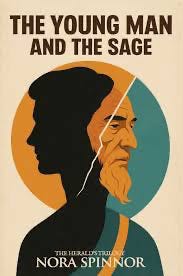
From The Young Man and the Sage:
“You know, most of the most famous paintings we know today only became famous after the artist died. … The painter could have wallowed in despair when his first few paintings were ignored. He could have given up or changed the way he painted. But if he had, we wouldn’t call it art. Art doesn’t need to be recognized. It’s an expression of the soul in the most vulnerable way.”
Perhaps the greatest lesson we can take from the cultural icons and intellectual heroes of history is that they fought for their vision no matter what the world had to say about it. When Nikola Tesla’s college professor shamed him for believing it was possible to one day design a perpetual motion machine, he nearly gave up. From a place of hopelessness, however, he found courage in himself. By the end of his life, he had created over 700 patents, many of which formed the foundation of the electronic technology we use today. Many patents never made it to market, and it is argued that he tapped into “radiant” or “zero-point energy” and designed the “impossible” perpetual motion device.
You define your limitations unless you let the world define them for you first. Anyone who dares to try something different is bound to get criticized. Some people are jealous; other people think they know better than you. Do not allow them to decide your future.
Forget about likes and follow your vision.
Find The Young Man and the Sage by Nora Spinnor on Amazon and other major book retailers.
Visit netism.org for more information about Netism.
Comments