3I/ATLAS displays anomalies we have never before seen in comets. So far, no official statement has been made regarding its origin or whether it could be technological. In this paper, we examine several of these anomalies through the lens of aether physics. The discussion that follows is purely speculative, exploring how certain characteristics might relate to advanced space-propulsion technology, without affirming that this is the case.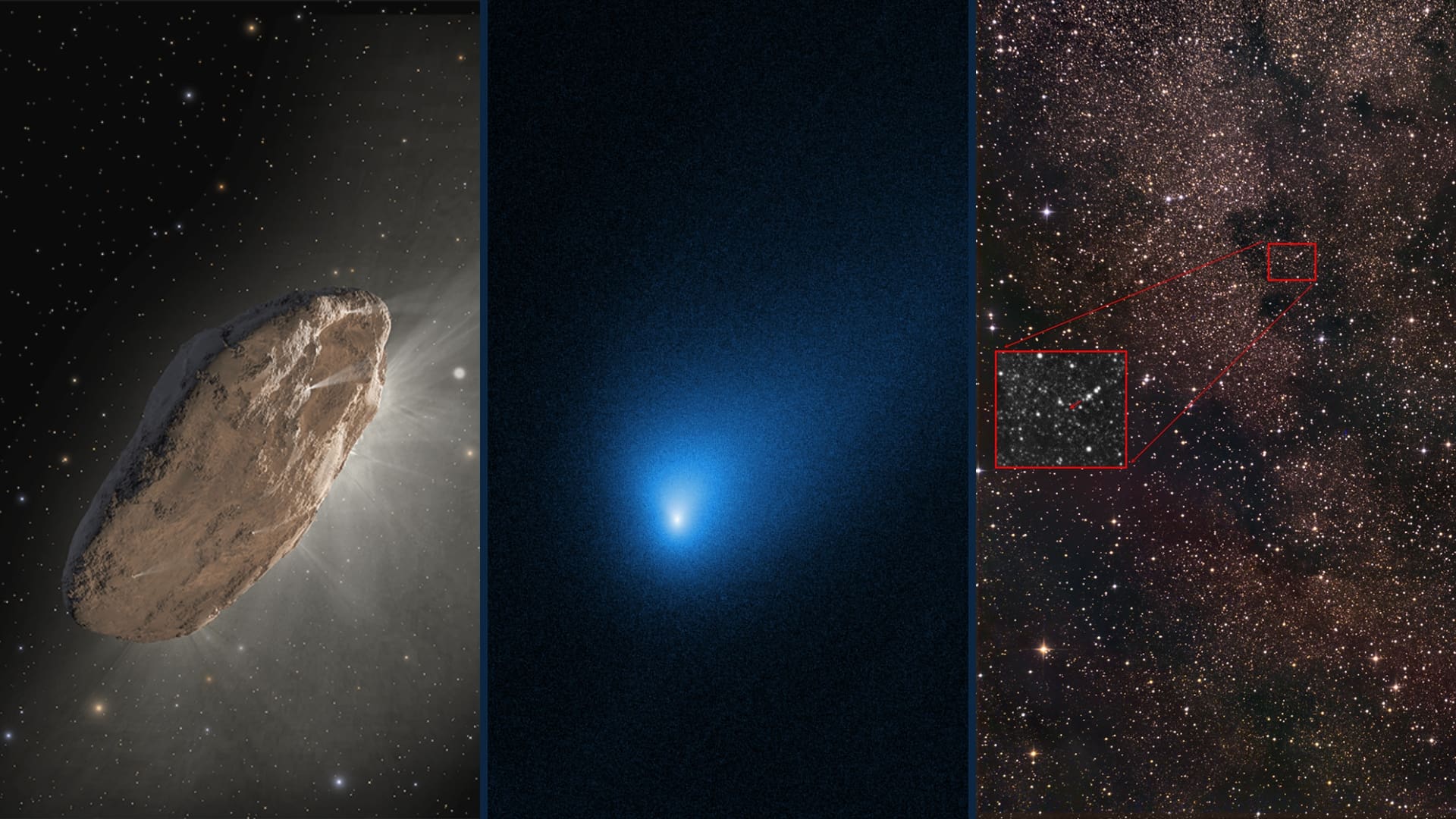
How Aether Space-Propulsion Works
Space propulsion in this domain depends on a shift in perspective: we must stop regarding space as empty and recognize it as filled with an undifferentiated substrate that is neutral across all domains, called aether.
Aether is, by nature, not directly detectable or responsive to conventional measurement. This makes it a strong candidate for what science calls dark matter and dark energy, phenomena that exist through their effects but remain invisible to our instruments.
If we can understand aether, we can manipulate it.
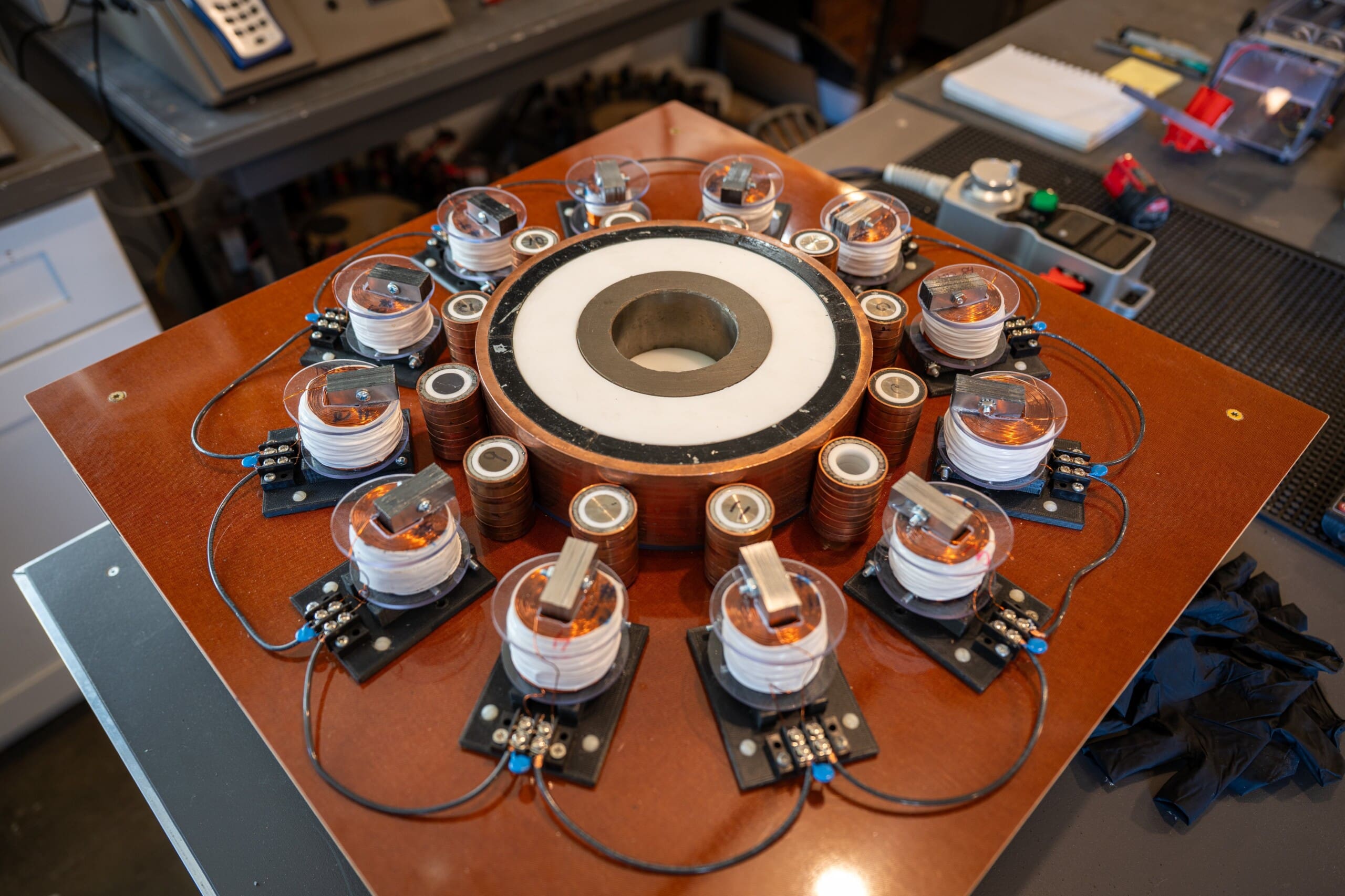 One example is the Searl Effect Generator (SEG). This device uses concentric rollers and rings spinning at high velocity to create strong magnetic and electrostatic gradients. In doing so, it unexpectedly produced an “anti-gravity” effect, appearing to reduce local weight. Importantly, this effect was discovered by accident. The SEG was always intended as a renewable power generator. The lesson is that power generation and propulsion are not separate categories but different applications of the same aether manipulation.
Another example is the T. Henry Moray Radiant Energy Device. Moray found that sharp, high-voltage pulses could disturb the balance of the surrounding aether field, shifting its local pressure or density. By attaching a specially tuned valve, he captured the resulting energy flow. The effect was “over-unity,” meaning the device output more energy than it consumed by tapping into the ever-present reservoir of the aether.
Space propulsion becomes possible by applying these same principles. Instead of pushing a craft forward by ejecting fuel from behind, a properly tuned system manipulates the aether in front of the vessel. By lowering density or creating a “sink” in the field ahead, the craft is effectively pulled forward by the currents of the aether.
This makes propulsion:
- Faster:aligned with the natural flow of the substrate
- More efficient:no wasted reaction mass or constant fuel burn
- Self-sustaining:it draws on the inexhaustible energy potential that fills space itself
In short, aether propulsion works by moving the surrounding aether, which looks empty but is present and usually static. By disrupting this stasis and creating pressure or density differences, we can draw energy and propel through space.
(The Searl Effect Generator demonstrated an “anti-gravity” effect by accident, not by design. It was always used and intended to be a renewable power generator.)
What Is So Strange
Here we list some anomalies that could potentially hint at technologies that are explainable within Netism’s aether physics model:
What we see: CO₂ is about eight times stronger than H₂O at this distance.
Why it matters: Most comets near this distance breathe out mostly water.
Normal frame: An outer-system origin with CO₂ near the surface, fresh fractures, or a crust that vents CO₂ more easily than water.
Aether frame: CO₂ is used as the preferred “exhaust” because it couples well to fields, so it is ideal for fine steering.
Test: Watch for deliberate-looking changes in CO₂ release when the object needs to adjust course. Timing that lines up with geometry changes would support the aether read.
What we see: Water appears, yet far less than expected.
Why it matters: This hints at selective venting or a thermal barrier.
Normal frame: A dust crust that traps ice, low heat penetration, or buried water layers.
Aether frame: Water is held back on purpose while CO₂ is released because CO₂ performs better for field coupling.
Test: Track H₂O vs CO₂ over time. A pattern where water stays suppressed even as heating increases would favor control rather than simple warming.
What we see: Gas-phase nickel lines appear and iron stays below detection.
Why it matters: Nickel and iron usually travel together in comet gas.
Normal frame: Nickel released through unusual chemistry, such as carbonyl formation or low-temperature desorption that does not free iron.
Aether frame: Selective chemistry used to seed the coma with the ions or atoms that respond best to magnetic or dielectric gradients.
Test: Look for time-locked nickel bursts that correlate with shape changes in the coma or small course tweaks.
What we see: A strong plume points toward the Sun from the lit side and a fainter tail points away.
Why it matters: The geometry is uncommon and can look inside-out at first glance.
Normal frame: Heavy grains launched by gas jets on the sunlit side. Light pressure cannot easily push them back.
Aether frame: The plume acts like a forward “anchor” into the solar field. Thrust comes from interacting with that forward mass flow.
Test: Check whether the plume strength tracks small changes in trajectory that are hard to explain with sunlight alone.
 What we see: By late August the away-from-Sun tail reached about 56,000 kilometers.
Why it matters: Long tails signal strong, sustained release and lots of dust.
Normal frame: High activity as fresh areas open, plus steady gas drag.
Aether frame: The tail behaves like a field rudder. A larger, structured wake can help the object “grip” background currents.
Test: Watch for periodic structuring or waves in the tail that match rotation or planned maneuvers.
What we see: The envelope of gas and dust spans hundreds of thousands of kilometers and is CO₂ heavy.
Why it matters: Size and composition control how the object interacts with light, plasma, and fields.
Normal frame: High volatile content near the surface with rapid activation.
Aether frame: The coma is a working sheath that stores and shapes energy flow, similar to a resonant bubble around the craft.
Test: Look for coherent changes in brightness and polarization across the coma that line up with attitude or spin changes.
What we see: The dust looks redder, which usually points to larger, heavier grains.
Why it matters: Heavier grains are less sensitive to light pressure and can be steered by jets.
Normal frame: Fragmented crust releasing coarse material, plus mild space weathering.
Aether frame: Heavy grains serve as ballast that can be aimed with jets, giving precise, directional control of mass flow.
Test: Map grain size vs jet direction over time. Consistent aiming of heavy grains during turns would be a strong sign of control.
What we see: CN appears early while some other common carbon chains stay weak.
Why it matters: Molecules absorb and emit at different frequencies. The mix hints at tuning.
Normal frame: Layered chemistry with some precursors missing from the shallow active zone.
Aether frame: Exhaust is tuned to the frequencies that couple best to the local field environment, like choosing the right note to resonate.
Test: Compare spectral changes to solar wind and magnetic sector changes. A lockstep response would support field tuning.
What we see: Inbound speed near 60 kilometers per second on a hyperbolic path.
Why it matters: It will not be captured. We get one passage to study.
Normal frame: A natural interstellar object with high excess velocity from its birth system.
Aether frame: Mastery of field highways that allow fast interstellar transits with minimal traditional fuel.
Test: Look for subtle, energy-efficient course refinements rather than random jets near key geometry points.
What we see: The inclination sits near 175 degrees, close to the ecliptic plane yet traveling the opposite way.
Why it matters: Such threading is statistically uncommon for a random visitor.
Normal frame: Chance alignment plus discovery bias since we scan near the ecliptic.
Aether frame: Deliberate threading of planetary field wells to sample environments or to use them as navigational guides.
Test: Check for timed outbursts near optimal planetary longitudes where field effects peak.
What we see: Closest approach to the Sun around October 29, 2025 with small solar elongation that hides it from Earth telescopes.
Why it matters: The most active phase is hard to monitor from Earth.
Normal frame: An observing challenge, nothing more.
Aether frame: An ideal window for a stronger field maneuver that stays out of sight of ground instruments.
Test: Use a spacecraft at other vantage points. After the conjunction, look for a trajectory offset that is larger than expected from normal outgassing.
What Should We Do?
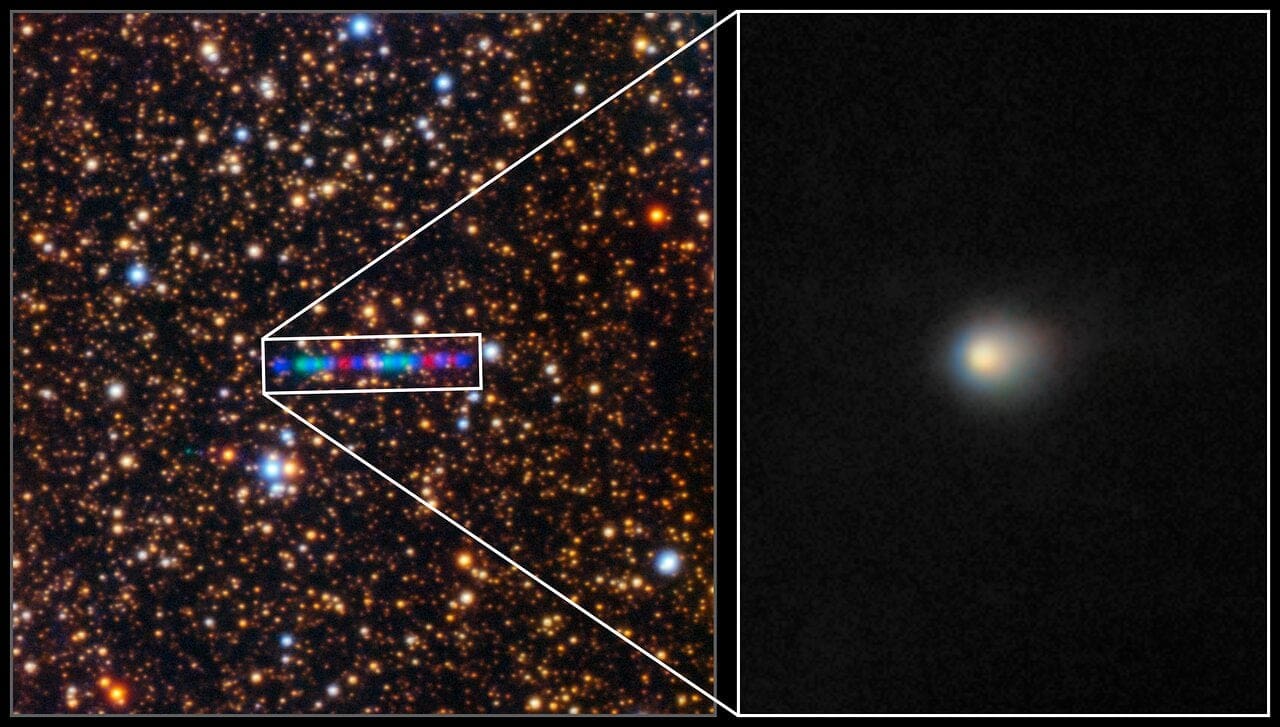
We Should Study it
Whether or not it is technology, we should seek to understand it more fully.
We should also look for technology.
Our sun is a late-comer to the Milky Way; the universe holds many more stars that are billions of years older than ours. We should assume that intelligent life is out there with technology far superior to ours. Adding technology to the radar in the field of aerospace could potentially reveal incredible insights, beyond just 3I/ATLAS.
We should be humble.
Evidence of intelligent extra-terrestrial life should come as a sort of Copernican revolution to humanity. We are not the most advanced beings in the galaxy, and that we have much to learn.
Why Alien Life Might Not Be a Threat
Any species that has survived for millions of years has likely reached a stage in its evolution where violent tendencies have been relinquished. The same technology that allows for advanced space propulsion could be weaponized into something far more destructive than nuclear bombs. This knowledge carries an implication: a species either achieves a global peace agreement or faces near annihilation. More advanced civilizations tend to have a stronger sense of unity and a mutual commitment to avoid violence.
We also may not have anything they want. Popular images of aliens invading Earth to take over are impractical for one simple reason: our atmosphere is uniquely suited to life on this planet, but not necessarily to beings from other worlds. Species that abandon their planets due to habitability loss rarely survive long-term.
Our awareness of them does not change their capabilities. If extraterrestrials wanted to take over Earth, there would be little we could do to stop them. Our weapons pale in comparison to technologies that may have been refined for millions of years. We could neither imagine nor predict what type of defense would be effective. Yet the fact that we do not already live under alien domination suggests that we will not in the future.
In reality, we are less vulnerable when we pursue understanding. The more knowledge we have, the stronger our position becomes. Therefore, gaining information without resorting to force remains the wisest course.
But It Looks Like a Comet…
At first glance, 3I/ATLAS certainly fits the comet label. It has a glowing coma, a broad tail stretching tens of thousands of kilometers, and a reddish dust signature that makes it resemble many long-period comets from our own solar system. To most observers, it looks like nothing more than another icy body passing by.
The appearance alone, however, does not settle the matter. Its chemistry, trajectory, and selective emissions break almost every rule that guides our understanding of comets. The fact that it looks like a comet simply tells us that whatever is happening, the end result produces dust and gas in ways that mimic normal cometary behavior.
One possibility is that it truly is a comet, but one born in a very different stellar environment. If ATLAS formed around another star, perhaps in a metal-poor region of an exotic galaxy, its chemistry could naturally differ from the comets we know. That would explain why carbon dioxide dominates, why water is suppressed, and why nickel shows up without iron. From this angle, ATLAS is still natural, simply unusual because its birthplace was unusual.
But there is another angle. From an aether perspective, a body using field-based propulsion would look almost identical to a comet. By releasing selective gases and dust, a craft can cloak itself in a bright coma that hides its nucleus while also using the dust cloud as a working sheath for field interactions. Heavy grains serve as rudders, CO₂ acts as the active exhaust, and the overall effect is that the object both moves and looks like a comet.
So yes, ATLAS looks like a comet. That is exactly why it can move through our system largely unnoticed. Whether it is a natural wanderer from an exotic birthplace or a demonstration of field-based navigation, its disguise remains the same.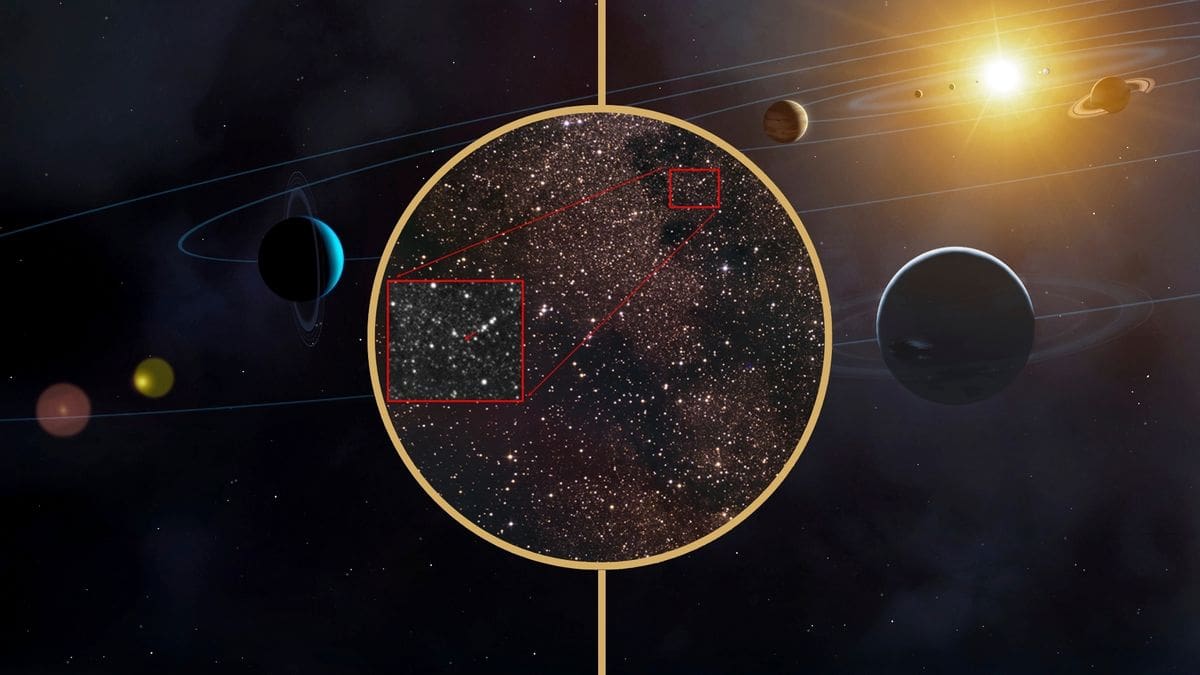


Leave A Comment