Identity
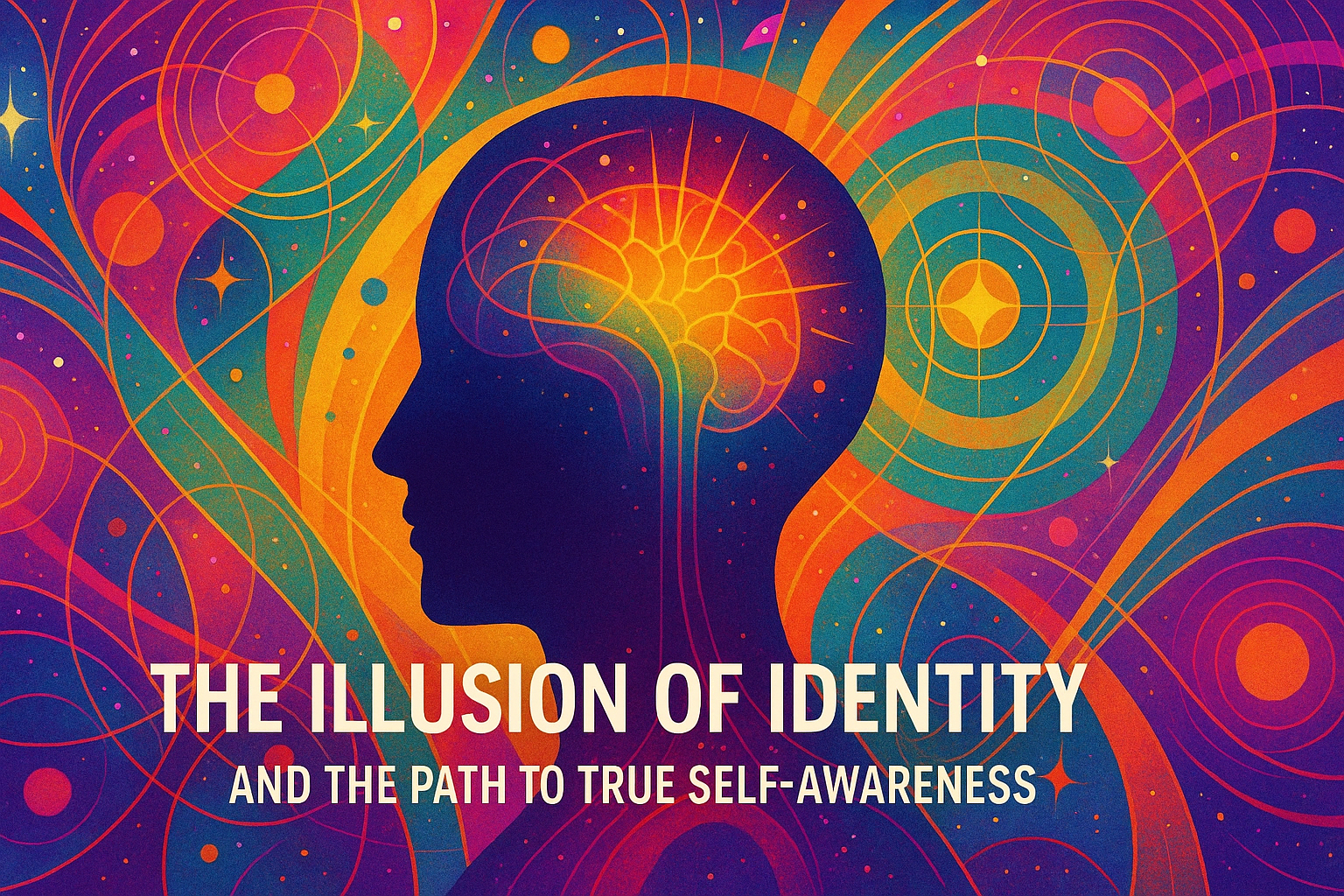
When asked to define themselves, most people struggle. They may describe their position in life, their career, their relationships, or their physical characteristics. Yet none of these truly capture who they are. Names, occupations, beliefs, and social statuses are fleeting markers that help us navigate the material world, but they do not define the core of our being.
Identity is transitory—a shifting construct within a vast web of interconnected consciousness. We are not static labels but fluid, evolving beings, embodying countless forms and characteristics throughout the multiverse. To be fluid is to accept that change is constant. Just as water takes the shape of its container, we adapt to the roles and environments life presents.
Netism teaches that beyond these adaptations lies a deeper, formless awareness—a consciousness that connects all aspects of existence. Recognizing ourselves as fluid entities allows us to transcend identities that no longer serve us. This realization is both a liberation and a responsibility: it empowers us to evolve freely while challenging us to remain mindful of how we shape ourselves in response to our environment.
Listen to Mira and Alex explain this Concept.
The Limitations of Ego
At its most fundamental value, ego defines the characteristic of self. A small amount of ego is necessary to navigate both the material and spiritual realms. It’s easy to become lost in the Net, losing a sense of self. When we become unbound, we must tie our strings back together, reinstating our identity as multifaced and eternal.
However, the ego quickly becomes a danger. Fear, self-doubt, and overconfidence are dangers to the soul’s overall progression. Fear binds us to our current position, self-doubt ensures we fail before we even begin, and overconfidence ensures we never learn more than we already know. Our evolution demands that we stay humble, always looking for new ways to improve.
To evolve, we must remain humble—open to correction, willing to expand our perspectives. Tethering our self-worth to external validation, whether through praise or criticism, leaves us chasing illusions. Instead, we must cultivate intrinsic worth—the unbreakable connection we share with the cosmos. While the external world perceives only our surface, our deeper spirit—our intentions, awareness, and character—belongs solely to us.
By embracing our unique journey, we learn to love ourselves not for being perfect, but for being in motion—always learning, always expanding.
The Cosmic Perspective: We Are More Than “Me”
Netism posits that the universe is filled with interconnected life—dimensions, timelines, star systems, and realms beyond ordinary perception. We exist across these realms, though our waking consciousness remains unaware of it.
These alternate versions of ourselves are called soul shards—fragments of a larger, more expansive consciousness that are tied together, pieces of the same soul. Each shard represents a different path our soul has taken, making choices distinct from the ones we make in this lifetime.
Ancient folklore and spiritual traditions have long hinted at this concept. Medieval German folklore describes the doppelgänger, an alternate self that appears as an omen of imminent death. This superstition may reflect a deeper truth—when two versions of the same soul converge on the material planes, it creates a paradox.
In normal circumstances, we will never physically encounter our other soul shards. They exist in parallel dimensions and distant worlds, playing out different timelines of major life decisions. While we cannot determine how many shards exist, the number is finite. Eventually, through ascension, we reunite with these fragments and gain full awareness of the paths they have traveled.
From this cosmic vantage point, our everyday sense of “me” is merely a fraction of our true self. Each decision we make is meaningful to our personal timeline, yet it contributes to the greater experience of our entire soul. Understanding this brings humility—we are neither insignificant nor the sole center of existence. We are active participants in an unfolding cosmic web.
Balancing Our Concept of Self
Many spiritual traditions, such as Buddhism and Taoism, advocate dissolving the ego entirely to transcend the self and experience universal consciousness. Yet we are here for a reason—there are still lessons to be learned in the material realm before we ascend to the aethereal cycles.
To learn, we must engage with existence—form identities, make choices, and experience their consequences. Just as we construct identities on Earth to navigate society, we must also discover our identity on the spiritual planes. Reaching our other soul shards and integrating our past experiences across the multiverse is part of our evolution.
However, this does not mean clinging rigidly to identity. The key is balance—to embrace identity as a tool while recognizing that it is temporary, not our ultimate truth. Just as we adopt different roles in different lifetimes, we must learn to move between them fluidly, carrying wisdom without attachment.
In the higher realms, identity becomes more expansive—it is no longer tied to material constructs but defined by growth, awareness, and the lessons learned across lifetimes.
To ascend, we must master this duality. We must act as individuals while understanding that we are part of something infinitely greater. We navigate existence with intention but remain unattached so that, when the time comes, we can release identity, transcending all past actions in search of a greater truth.
This is the path to true self-awareness: not the eradication of identity, but its evolution into a conscious, fluid expression of our infinite nature.
